Posts

Sugar Science 101: Why is Sugar Important in Food Industry?

Image
With the increasing awareness among consumers about nutrition and healthy diet, a lot of people have started to see sugar as a devil, but if you ask me, I’ll say it is like an angel in disguise. If I randomly ask you about  what is the role of sugar in food , it is highly probable that you’ll say sugar makes food taste sweet. While sugar is primarily known as a sweetener, you cannot put it in a box.  Sugar is like an Indian movie star; it is versatile. For those of you who are not familiar with Indian movies or actors, I would tell you that the actors in India are not just actors; they are dancers, entrepreneurs, marketers and sometimes singers too. Similarly, sugar is a multi-talented ingredient in the realm of food. Here are a few of the other talents sugar has. It can balance flavours. Aside from increasing sweetness, sugar is also used to enhance, lessen or balance the flavour of ingredients naturally present in food. It contributes to the flavour profile by inte...
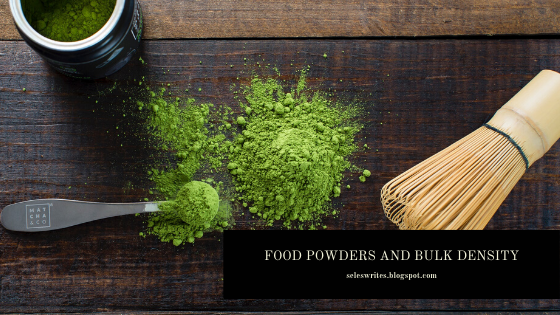
Should you measure food in spoons?

Image
Well, it depends on what and why you are measuring. People who cook, bake or just work with a lot of powdered ingredients in the food are always conscious of what and how much of it they put in their recipes. These food magicians often enjoy mundane activities like grocery shopping and selecting the right box to buy to fill their pantry shelves. No one wants to compromise with the taste. But a lot of people are always ready to compromise on the price. And why shouldn’t we? Saving money is a definite way to bring joy. Hence, whenever a company introduces a product in the market, similar to one we were using before, and offer the same quantity at a lower price, most of us prefer to switch to these money-saving brands. But are you sure that you are saving money in this process? Let’s take an example of health drinks powder like Horlicks, Bournvita or Protinex. Even though these items are listed under the category ‘Health Drinks’ on Amazon, most of us use it as taste modifier in o...

Kulfi Science: How Maillard reaction gives Kulfi its light brown colour?

Image
The reaction that makes Kulfi a unique flavourful feast Every year during summers, I, like my mother, and her mother before her, used to wait for the Kulfiwala (Kulfi Seller) to arrive in our street in the evening and the moment we heard him shouting his arrival, we would step out of our home to greet him and buy kulfis to treat our sweet tooth. There’s no denying its power to tempt and make people fall in love with it. For those of you who are not familiar with this term, ‘kulfi’ is a popular Indian frozen dessert made from simple ingredients such as milk, table sugar and cardamom seeds ( elaichi) . You can also add nuts (and other ingredients) to the recipe.   But have you ever wondered why traditional Kulfi, which is made from milk that is white in colour, is light brown or cream in colour? And why does kulfi tastes so much better than milk? The most common method to make kulfi is a batch cooking process.   In this process, you heat the milk up to the boiling point (...

Fat Facts: Why Fats and Oils make our food so much better?

Image
Some people think that fat is a black sheep in the family of foods, while for others it is the golden goose. It all depends on what and how much you know about them. What are Fats and Oils?   In scientific parlance, fats are referred to as triglycerides, a.k.a esters of three fatty acid units attached to a molecule of glycerol. Did too many scientific terms confuse you? Let’s look at this another way. There’s a human named Wand - made from long chains of carbon, hydrogen and oxygen molecules. Wand is an alcoholic, but a very picky one. Once Wand is near his choice of alcohol- the sweet tasting alcohol called glycerol- the strong affinity unites them and together they become fat. Why are fats and oils so essential to cooking? Excellent carriers of flavours If you are an Indian or cook Indian food, you may have heard of the terms ‘Tadka’ (also sometimes spelt as ‘Tarka’) and ‘Chhaunk’. It is a process where oil is heated in a pan and then, spices are added (ac...

The Ancient Art of Aquaponics: Growing plants and food without soil

Image
In the last few years with the increased awareness among the people about the harmful effects of the use of chemical fertilizers, a lot of companies have started marketing their products as organic and non-organic. However, these label stickers on food packaging haven’t been completely successful in gaining back the trust of health-conscious consumers. But what if there was a way   to produce plants and crops without soil, fertilizers and chemicals. Will that remove the doubt from a consumer’s mind? Can we grow plants without soil?  Soil, in scientific parlance, is the porous uppermost layer of Earth's crust that helps plants to grow. When I was in school, I was taught how different plants need different kinds of soils and climatic conditions to grow. And so I believed that without the right soil, you can’t grow the plants. I was sure that every state in India has its own set of fruits and vegetables to offer. But then I stumbled upon the concept of Aquaponics . Aquapon...

The Magic of Melting Ice Cream: Why different ice creams melt at different rates?

Image
Ice cream is one of the most popular, loved frozen treats. It is easily available and affordable. I have never met anyone who has never tasted ice cream. But have you bought different brands and types of ice creams and kept it at room temperature just to observe how much time it takes for them to melt. If you have done this, you would have noticed that not all of them melt at the same speed. Some will completely melt within a few minutes while others may take longer. So what makes ice cream melt and why not all of them melt within the same time? Here's what you need to know. Ice cream is usually made by mixing the milk fat, sugar (or sweetener), stabilizer and emulsifier. This mix is then pasteurized, homogenized, aged and frozen. During this whole process, water and fat molecules in the mix are brought together with the help of protein molecules, ice-crystals are formed, and air molecules get incorporated. In the end, ice-cream is a frozen foam that consists of air dispersed...

An Introduction to Wheat Gluten: the Glue that holds your bread together

Image
In December 2017, a video went viral on the social media platforms, spreading rumours that there is plastic present in Aashirvaad Atta. As a result of it, a lot of people started experimenting at home by adding water to wheat flour and were convinced that their dough is stretchy because the flour they bought has plastic in it. To   put all the doubts and fears to rest, in March 2018, the manufacturing company of Aashirvaad Atta- ITC - had to release a statement explaining how there’s no plastic in the flour, that it is just elastic protein- known as ‘gluten’. Wheat flour is a mix of a lot of molecules, from complex chains of carbohydrates to vitamins and minerals. But when it comes to bread baking, 'gluten' is the component bakers mostly rely on.  What is gluten? Gluten (a word derived from the Latin word ‘glue’) is the Fevicol of the food world. It is the thing that holds your roti, breakfast cereals, pasta and bio-plastics together. It is not present in flour b...